Viristar Conference Platform (Staging)

Pre- and Post-Conference Workshops

About Pre- and Post-Conference Workshops
Pre- and Post-Conference Workshops are optional sessions offered immediately before and after the main conference. These workshops require an additional registration fee.
You may add workshops to your registration when completing the conference registration process.
Space in each workshop is limited, and registration is available on a first-come, first-served basis.
Pre-Conference Workshop
Foundations of Adventure Safety
Date and time: October 7-8, 2027, 8:30 am to 5:30 pm both days
Cost: USD 395
Description:
The Foundations of Adventure Safety (FAS) training is a 16-hour, in-person course that provides essential skills and knowledge for managing risks in adventure programs.
The two-day classroom-based training is designed for managers of outdoor, experiential, or travel programs that have adventurous components.
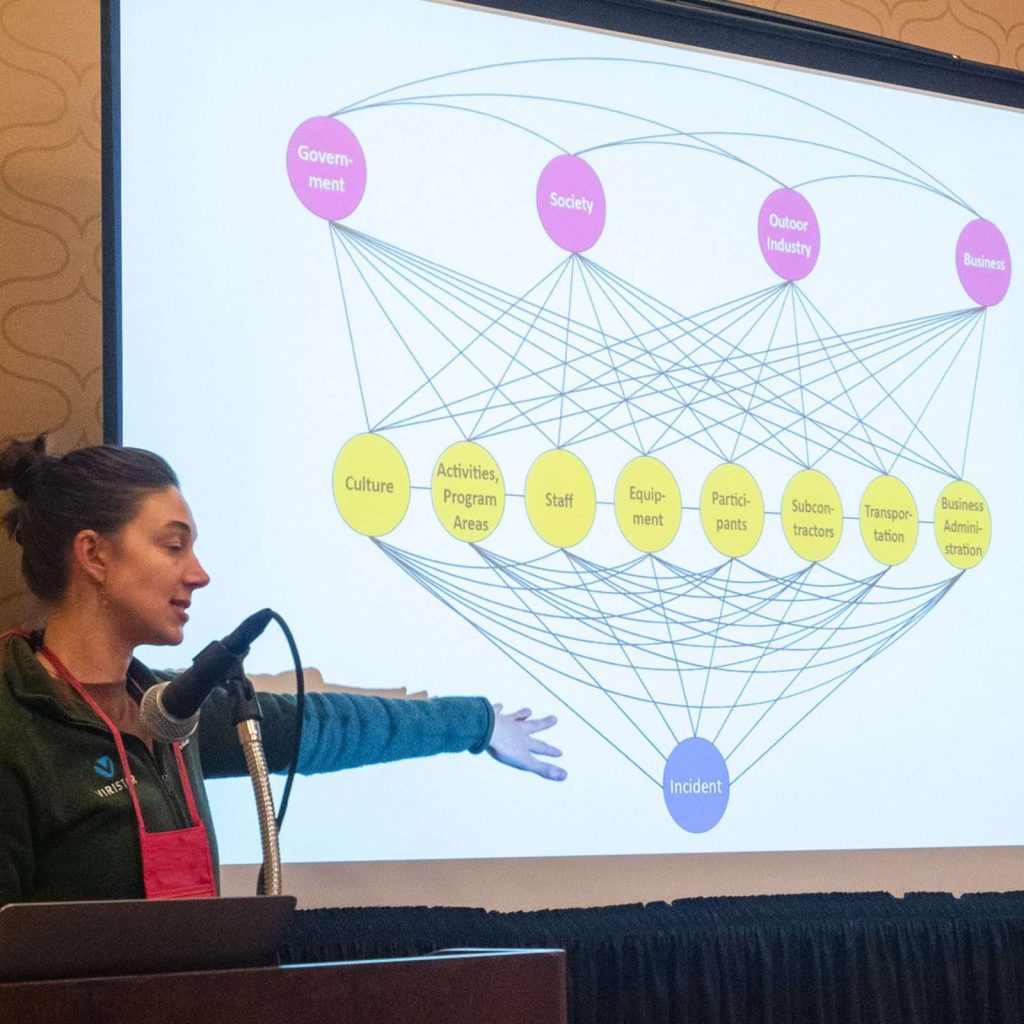
The course introduces a theoretical model of incident causation and prevention, the Risk Domains model, and addresses practices that administrators can take to develop a high-quality safety management system to eliminate and reduce risks.
Course topics include adventure safety standards, legal considerations, managing participants, staff training, medical screening, incident reporting, emergency planning, and more.
The class is immersive and engaging, and includes presentations, readings, case studies, role-play scenarios, and small group discussions.
The course textbook is the acclaimed Risk Management for Outdoor Programs: A Guide to Safety in Outdoor Education, Recreation and Adventure.
Participants who successfully complete the class receive a certificate from Viristar valid for three years.
Instructor: Jeff Baierlein
Post-Conference Workshop
Adventure Safety Leadership
Date and time: October 11-12, 2027, 8:30 am to 5:30 pm both days
Cost: USD 395
Description:
The Adventure Safety Leadership (ASL) training is a 16-hour, in-person course for instructors, trip leaders, guides, camp counselors, facilitators, field staff and other leaders of outdoor, travel, experiential and adventure activities.
The training helps those responsible for leading adventure activities understand how they can reduce risks and improve safety outcomes with the groups they work with and the adventurous activities they lead.
The course introduces participants to basic concepts in safety science, including a theoretical model of incident causation and prevention.

The training addresses topics where the knowledge and skills of activity leaders can powerfully influence safety outcomes. These subjects include:
- Safety standards
- Legal considerations
- Judgment & decision-making
- Hazard identification and risk assessment
- Safety management systems
- Safeguarding and child protection
- Safety by Design/Prevention through Design
- Standard operating procedures (SOPs)
- Psychological safety
- Adventure leadership attributes
- Human factors in incident causation
- Safety briefings
- Dynamic risk management
- Safety culture
- Participant management
- Emergency response procedures
- Equipment & clothing use and management
- News media relations
- Documentation
- Staff-to-participant ratios & supervision
- Food safety
- Sharing safety duties with third-party providers, chaperones, and others
- Incident reporting
- Just Culture
- Roles and limits of technical skills & formal qualifications
- The ‘competent person’ standard
- Integrated safety culture
- Human and organizational performance
- Fatigue management
- Site visits (recons/recces)
- Ongoing professional development
- Change management
The training provides awareness of topics where organizational management, rather than staff working directly with program participants, is in the best position to manage risks.
The class covers topics included in ISO 21102—Adventure tourism—Leaders—Personnel competence.
The course is designed to be globally applicable.
The course does not cover technical skills such as building climbing anchors, whitewater paddling, navigation, use of specialized equipment, weather forecasting, first aid or technical rescue.
The class is highly participatory and experiential, with scenarios, case study analysis, and group discussions mixed with presentations and readings.
Participants who successfully complete the Adventure Safety Leadership class receive a certificate from Viristar valid for three years.
Instructor: Jeff Baierlein